Glassware

Wine glasses

A glass is a tool with four parts, and the shapes exist for four reasons — two well supported, one real but modest, and one a compromise. This is how a glass is built, what changes when the bowl does, and the eight shapes our wine pages use.

Parts that matter
4
Shapes on our pages
8

Anatomy

A glass is four parts, and each one has a job.

Nothing on a wine glass is decoration except the decoration. The bowl lets the wine meet air, the rim gathers what leaves it, the stem keeps your hand out of the temperature, and the foot keeps the whole thing standing while you swirl.

Rimwhere the wine leavesBowlhow much air it meetsStemkeeps your hand offFootstability, and not much elseA third fullthe headspace is what you smell
  • Rim

    Where the wine leaves the glass.

    A rim that closes in gathers the aromatics into a narrower stream and aims it at your nose. A wide open rim lets the same aromatics disperse before they reach you.

  • Bowl

    Holds the wine, and the air above it.

    The width of the bowl sets how much surface the wine exposes, and the headspace is where the aromatics collect. This is the part of a glass that actually changes what you taste.

  • Stem

    Keeps your hand off the bowl.

    Glass conducts heat: a bowl held in a palm warms the wine within minutes. The stem also keeps the colour and the clarity in view instead of behind your fingers.

  • Foot

    Keeps the glass standing.

    Wide enough to survive a swirl is the whole requirement. Everything beyond that is design, and there is nothing wrong with design — it is just not a tasting decision.

Why the shapes differ

Four mechanisms — of four different sizes.

Glassware is sold with more certainty than the subject supports, so each of these carries how far we would go in defending it.

Surface area, and the air above it

Well supported

A wider bowl puts more wine in contact with air, so more aromatic compounds leave the liquid and reach your nose.

The clearest mechanism of the four. The wetted area and the volume of headspace measurably change what you smell, which is why a big bowl flatters a young tannic red and flattens a delicate white.

The bowl as a funnel

Modest

A taper towards the rim concentrates the aromatics on their way out instead of letting them spread across the room.

Real, and easy to overstate. A tapered rim does change the stream, and most people find a tulip more expressive than a straight tumbler — but the effect is smaller than the effect of the pour, the temperature or the bowl's width.

Temperature, by way of your hand

Well supported

Glass conducts heat, so a bowl held in a palm warms the wine; a stem exists mainly to prevent that.

Well supported and easy to check: a white at 10 °C in a stemless tumbler is noticeably warmer after ten minutes in the hand. Serving temperature moves a wine far more than the shape of the glass does.

Keeping the bubbles in

A compromise

Sparkling wine wants a wide surface for aroma and a narrow vessel to hold on to its dissolved CO₂.

The two wants pull against each other, which is why the flute is a compromise rather than a solution. In a white-wine glass a sparkling wine smells of more and loses its bead sooner; a flute keeps the bead and gives the aroma little room. A tulip sits between the two — which is why our pages say “tulip or flute”.

Read together: the width of the bowl and the temperature of the wine are the two things a glass genuinely changes. The taper helps a little. Everything else about a shape is either comfort or taste in the other sense of the word.

The shapes

Eight glasses, and what each one is for.

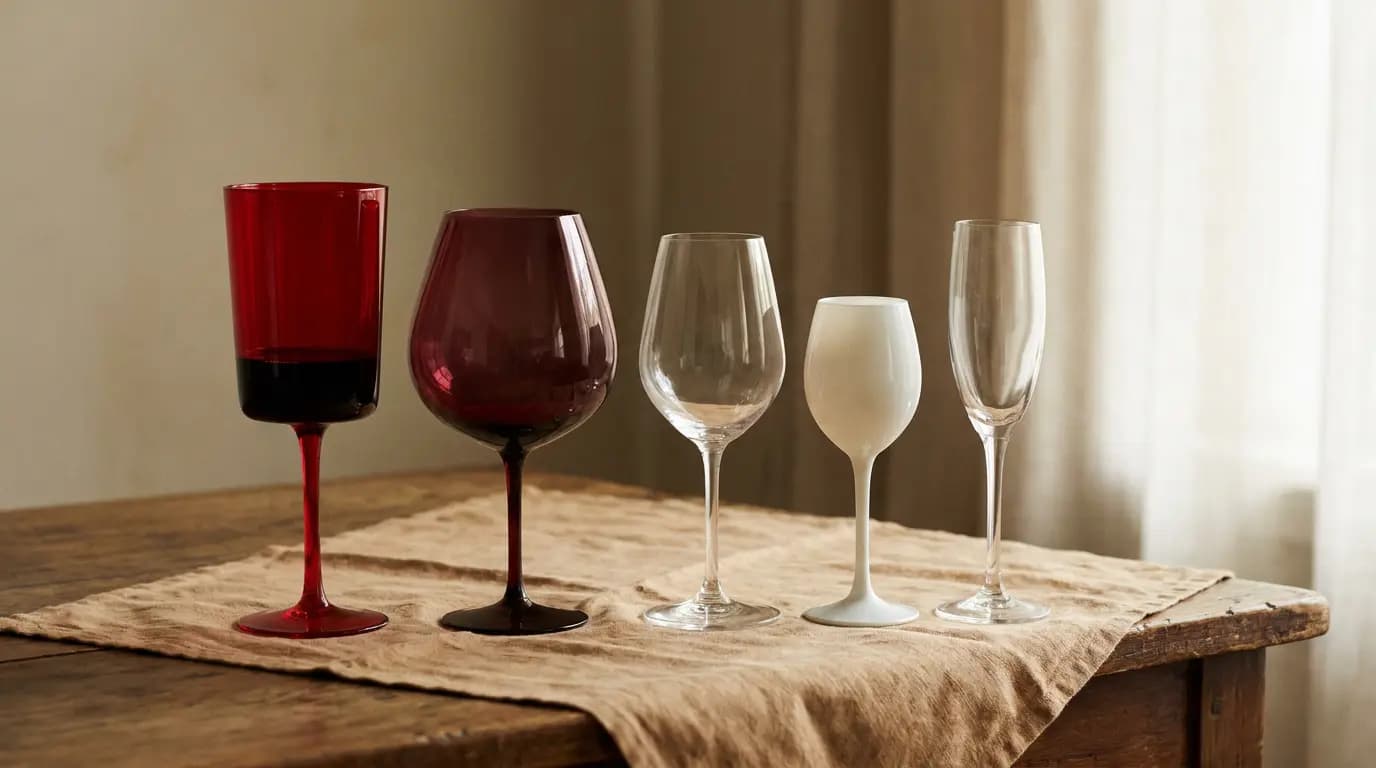
These are the eight shapes our wine pages use — the same names and the same silhouettes. Two carry the names of French regions, Bordeaux and Bourgogne, because the trade has called those bowls that for a century; the names describe a shape, not a rule about a grape. A wine page picks one of the eight from the wine's colour, sugar, tannin, vessel and bubbles, and the rule is printed under each glass.

  • Bordeaux glass

    a red-wine glass; a claret glass

    Tall bowl with a narrowing rim: gathers the aroma and softens the alcohol — the shape for dense, tannic reds.

    Best for
    Blaufränkisch and Burgenland red cuvées with Cabernet and Merlot.

    The height is the point: room for air and for a swirl, and a long wall for a big wine to climb.
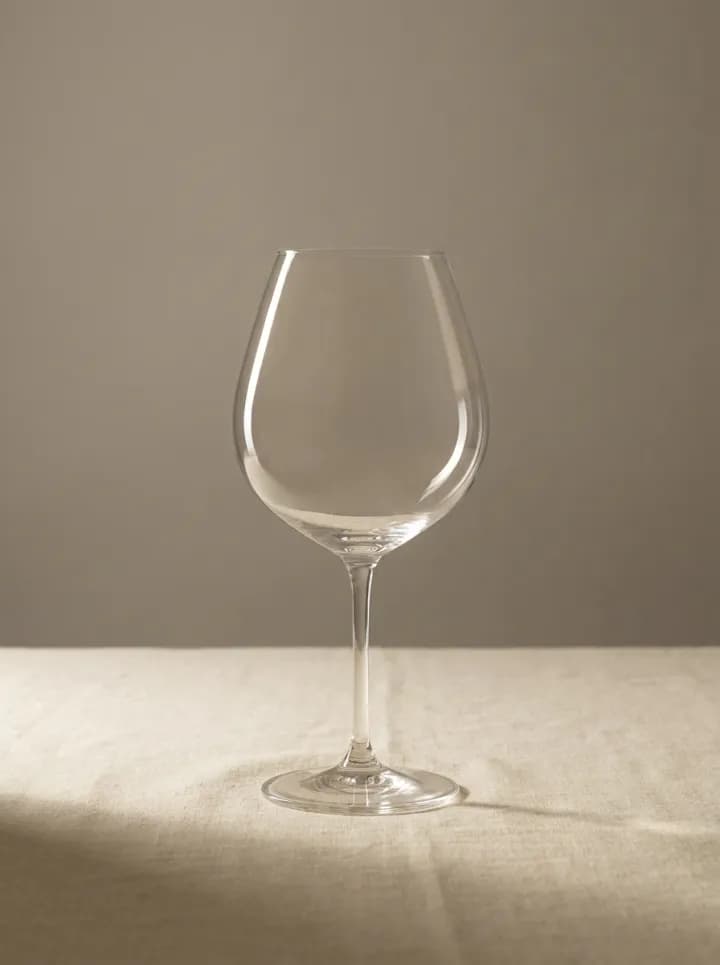
  • Bourgogne glass (wide bowl)

    a Pinot glass; a balloon glass

    A wide, round bowl gives the wine more air: it opens up delicate aromatics that a narrow glass keeps shut.

    Best for
    Pinot Noir (Blauburgunder) and Zweigelt; whites aged in barrel or large cask: Morillon, Weißburgunder, Grüner Veltliner.

    Beware the very large sizes: a small pour in a huge bowl shows alcohol more than fruit.

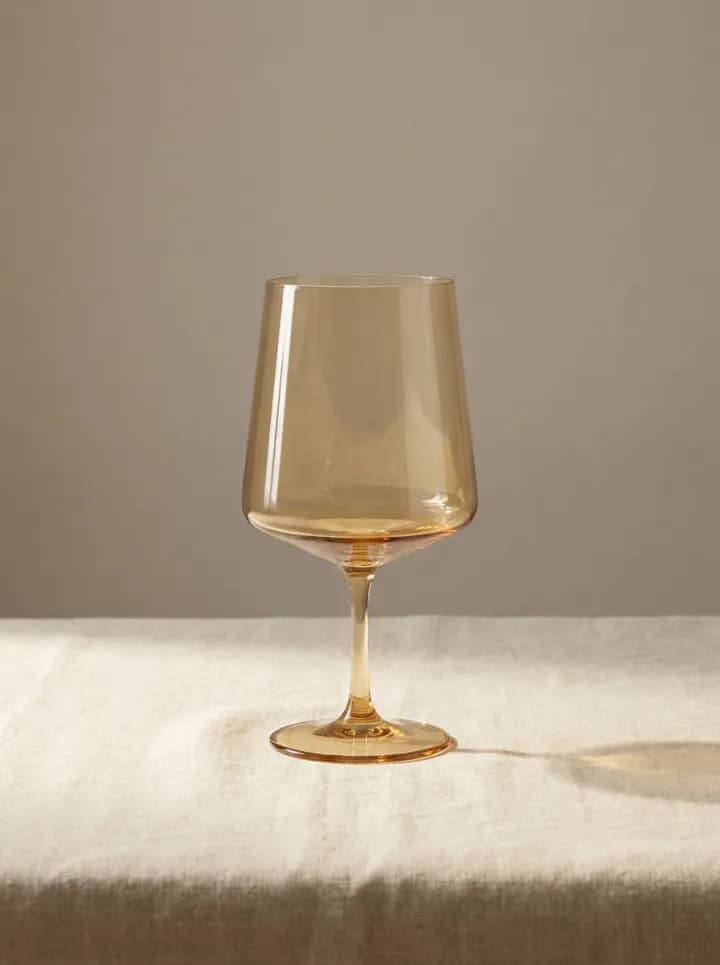
  • Amber wine glass

    no settled name; sold as a large white-wine glass

    A wide bowl with high walls: skin-contact wine is tannic like a red and needs air, but is served cooler.

    Best for
    Maischevergoren (orange) wines: Grüner Veltliner, Traminer and Muskateller on skins.

    Treat it like a red you serve cooler: it wants air, and a white-wine glass gives it too little.

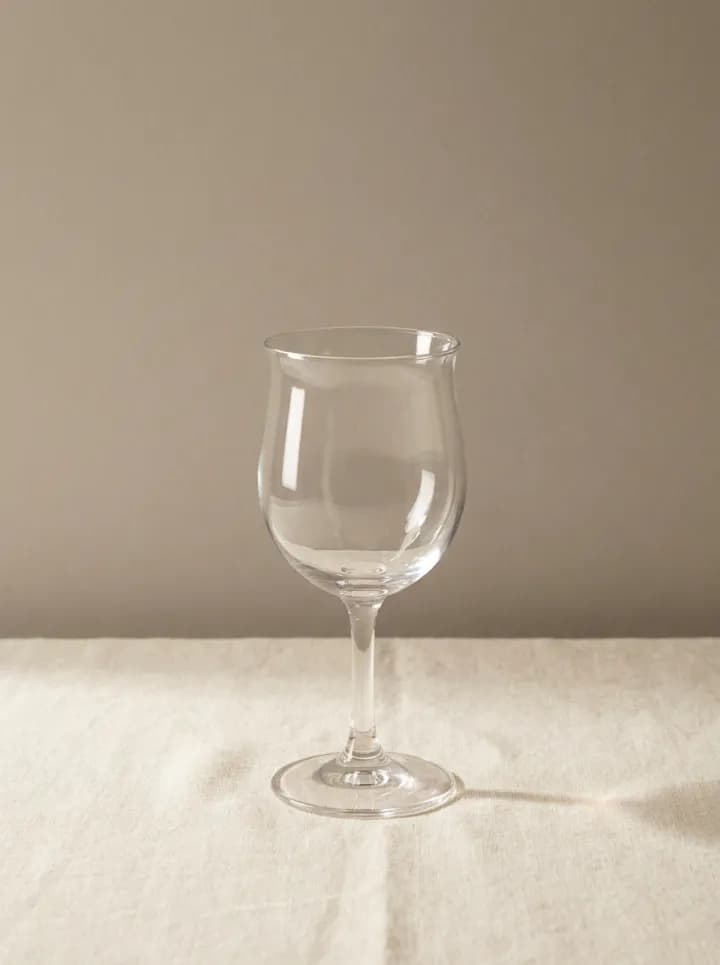
  • Universal tulip

    an all-purpose glass; a tasting glass

    A medium tulip: sweetness reads without extra air, and a big bowl would only let the wine warm up.

    Best for
    Lieblich (semi-sweet) wines: Muskat Ottonel, Traminer, Spätlese, lieblich Zweigelt.

    If you own one shape, own this one. It does nothing perfectly and nothing badly.

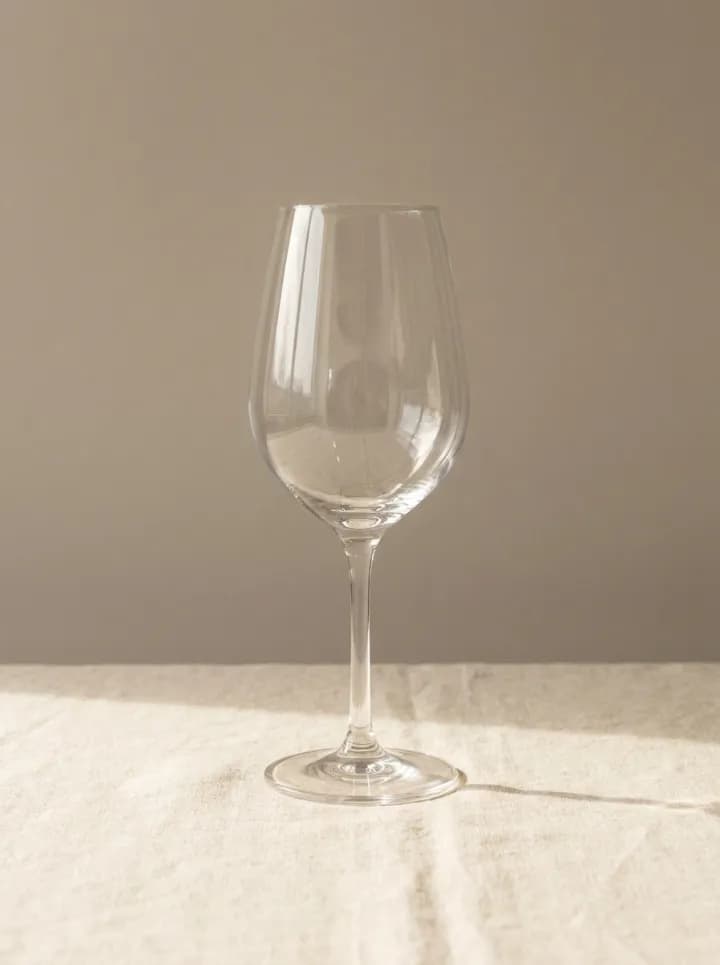
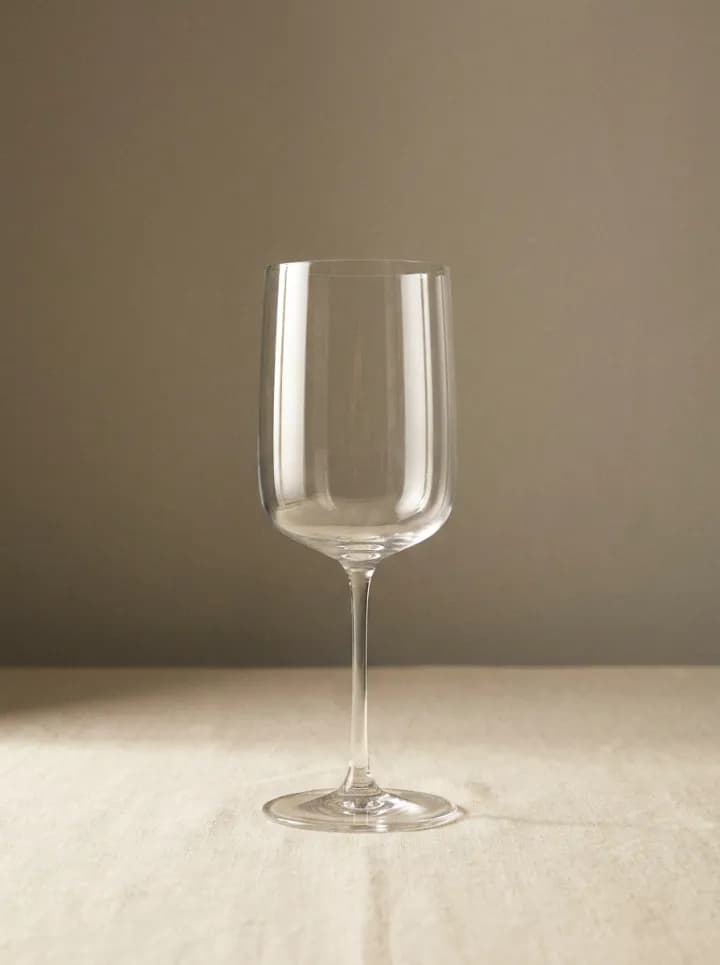
  • White wine glass

    sold as a Riesling or Sauvignon glass

    A small, narrow bowl: keeps the wine cold and holds the acidity in focus.

    Best for
    Grüner Veltliner, Riesling, Styrian Sauvignon Blanc, Gelber Muskateller, Weißburgunder, Wiener Gemischter Satz.

    It keeps the freshness in and the aroma close.

  • Rosé glass

    a rosé glass, sometimes with a flared lip

    A small bowl with a slightly flared rim: the wine stays cold, the fruit still gets out.

    Best for
    Zweigelt and Blaufränkisch rosé; Schilcher from West Styria.

    A white-wine glass does the same job; the flared lip is a refinement, not a need.

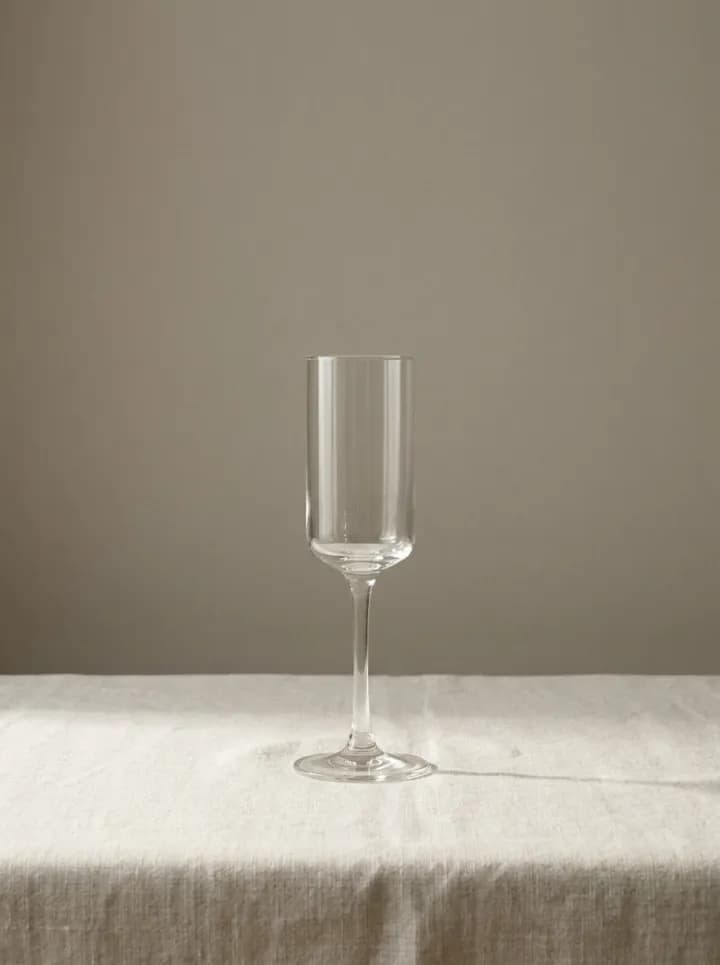
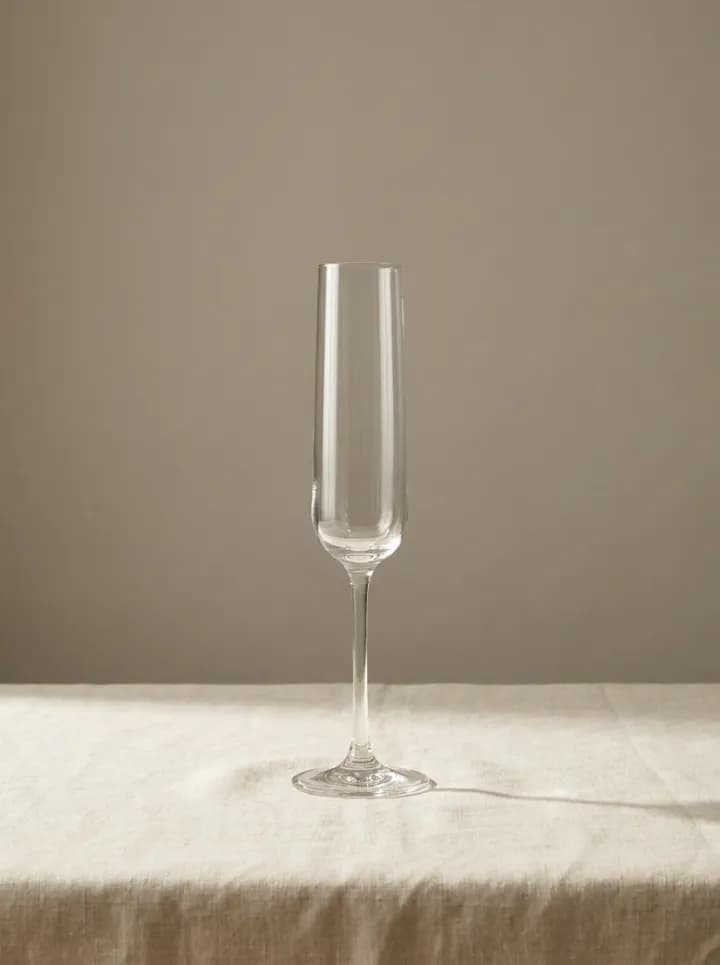
  • Tulip or flute

    a Champagne flute; a Champagne tulip

    A tall, narrow bowl: keeps the bubbles and the chill longer; a tulip gives the aroma a little more room than a flute.

    Best for
    Sekt Austria (Klassik, Reserve, Große Reserve); pét-nat.

    An honest compromise. If you care what the wine smells like, pour it into a white-wine glass and accept a shorter bead.

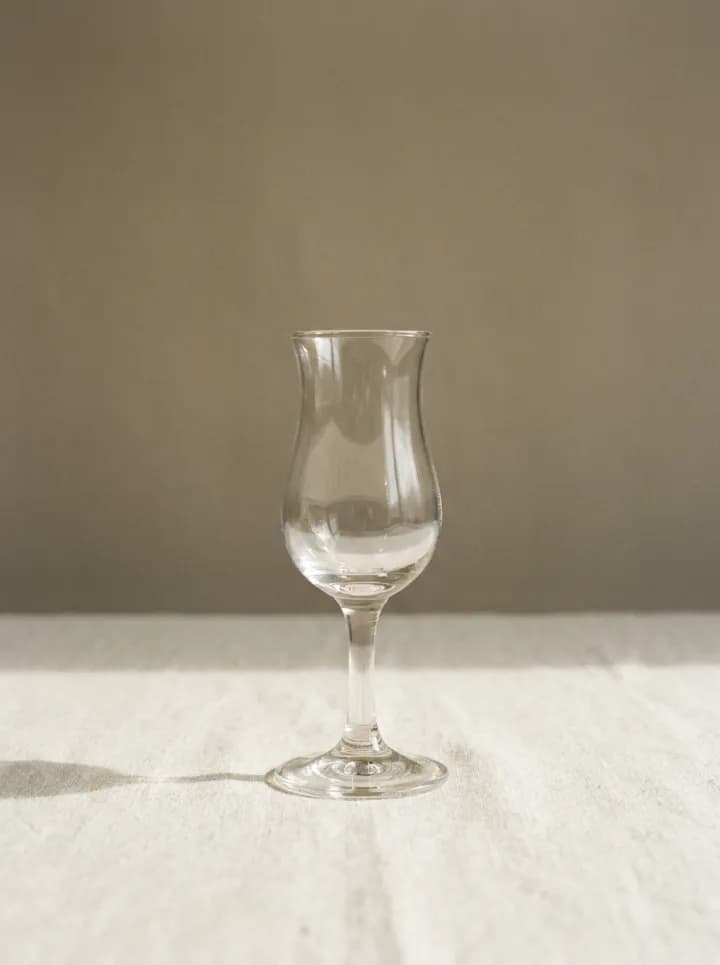
  • Dessert glass · Sauternes

    a Sauternes glass; the copita (sherry or port glass) is a close relative

    A small glass for a small pour: sweet wine is drunk in sips, and the bowl is sized to the portion.

    Best for
    Beerenauslese, Trockenbeerenauslese, Ruster Ausbruch, Eiswein, Strohwein.

    A sweet wine is poured small and sipped slowly — the bowl is sized to the portion.

What we pour into them

Our own pages, by glass.

Every wine page on this site prints the glass we would choose for it, and the reason. This is that mapping, with wines from the catalogue — read from the same rules the wine pages use, so nothing here is written twice.

Each wine page runs these rules in order and stops at the first one that fits. A wine without a known colour gets no glass at all — we don't guess one.

Four things people believe

And what is actually going on.

  • Every grape needs its own glass.

    Glasses sold by grape differ mostly in size. Our own pages use eight shapes, and the shape follows the wine's structure — tannin, sugar, bubbles — not its grape. A clean glass, a sensible pour and the right temperature matter more than the name on the box.

  • The shape moves the wine to the part of the tongue that tastes it best.

    The tongue map is not real: every taste quality is sensed across the tongue. What a shape changes is mostly what you smell and how much air the wine meets — the liquid lands in the same place either way.

  • A narrow glass concentrates the aroma.

    A narrowing rim gathers what leaves the glass; it doesn't add any. Make the glass narrow enough and there is little surface for aroma to leave from at all — the trade-off a flute makes.

  • A crystal glass tastes better than a plain one.

    Thin glass feels better at the lip and lead-free crystal is more durable, and both are real reasons to buy one. Neither adds anything to the wine — and a glass that still smells of last night's cupboard ruins it either way.

In practice

Keeping the glass out of the way.

The most common way a glass ruins a wine is not its shape. It is what was left in it, or how warm it got in your hand.

  • Rinse well, skip the perfume

    Hot water, a little unscented detergent if needed, and a thorough rinse. Detergent residue flattens the foam on sparkling wine and leaves a smell of its own; so does a towel washed with fabric softener.

  • Store upright

    A glass kept rim-down keeps the smell of whatever is in the cupboard. If you have to stack them, do it the day you use them, not for a season.

  • Pour a third

    More wine means less headspace, and the headspace is the part you smell. A glass filled to the widest point is a glass with nowhere for the aroma to gather.

  • Buy one shape, or two

    If one, a universal tulip. If two, a large bowl for reds and amber wines and a white-wine glass for whites, rosé and sparkling. Spend the difference on the wine.

Why we publish this at all

Half of what is written about glassware is a sales argument, and the wine trade repeats it because it is harmless. Our version of harmless is to print the mechanism, print how strong it is, and let you decide whether to buy the second glass. The rest of the reference is built the same way.

None of this is a verdict on a wine, and none of it is sponsored. getwine has no relationship with any glassware maker, and no brand appears on this page. The glass on every wine page comes from the rules printed above.